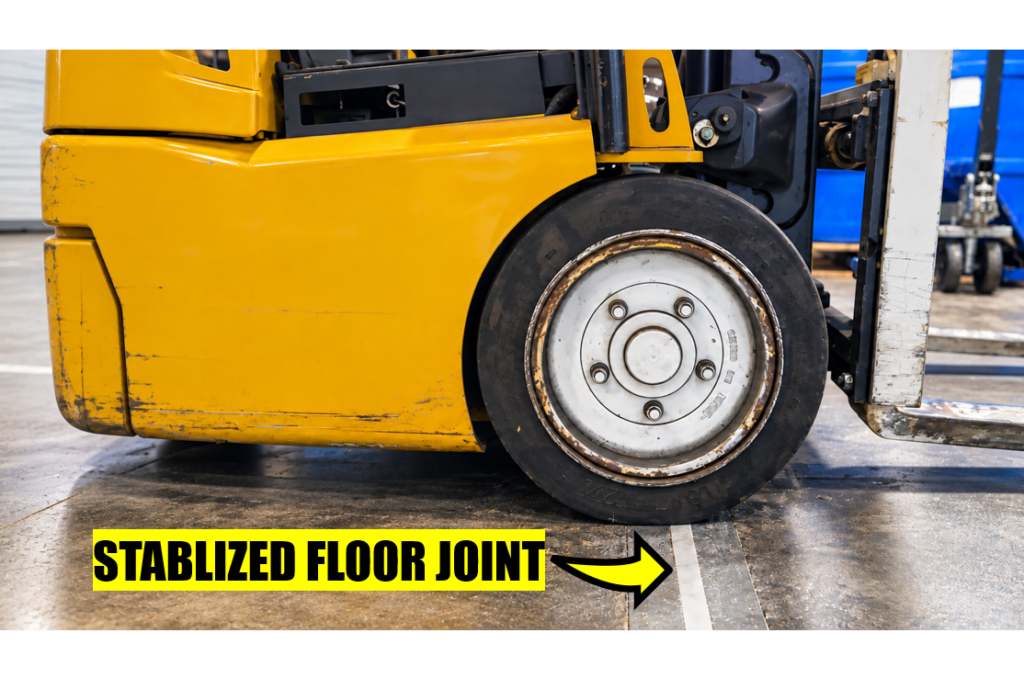


If forklifts bang, bounce, or slow down every time they cross a warehouse floor joint, the damage is already affecting the operation. Broken joint edges can continue to crumble under hard-wheel traffic, creating more debris, vibration, noise, and impact on equipment. The right repair depends on the type of joint, the amount of movement, the condition of the surrounding concrete, and how quickly the area must return to service.
A qualified industrial concrete floor contractor should inspect the joint before recommending a material. The repair may require removing failed filler, rebuilding the broken concrete edges, and installing a semi-rigid joint filler or flexible sealant that matches the joint’s purpose. This guide explains what Kansas City warehouse and facility managers should know before hiring a contractor.
What broken warehouse floor joints look like
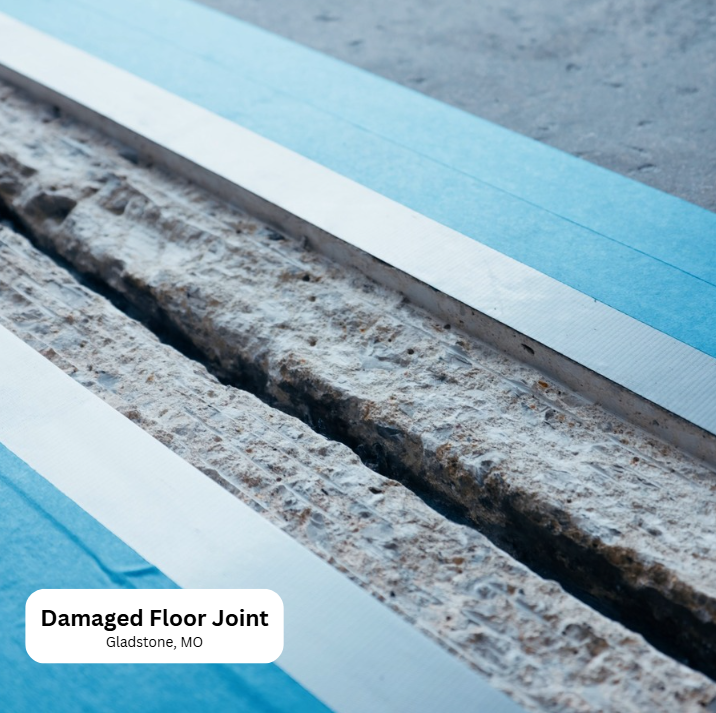
Warehouse joint damage often appears first along forklift travel paths, loading areas, turning lanes, dock approaches, and other high-impact locations.
Common signs include:
❌ Concrete breaking or crumbling along one or both sides of the joint
❌ Missing, cracked, sunken, or detached joint filler
❌ A sharp impact, vibration, or loud bang when forklifts cross the joint
❌ Small potholes or spalled areas developing beside the joint
❌ Debris returning soon after the floor is swept
❌ Different slab elevations or movement at the joint
❌ Previous patches that have loosened or broken away
Why damaged joints become more expensive
A forklift wheel striking an unsupported joint edge concentrates force on a small area. Once the edge begins to spall, each crossing can remove more concrete and widen the damaged zone. The rough transition may also contribute to tire wear, load movement, slower travel, operator discomfort, and repeated housekeeping around loose concrete.
A small, failed section is usually easier to isolate and repair than a long run with widespread edge loss. Early repair can limit the area that must be rebuilt, but the contractor still needs to address the cause instead of covering the surface with another thin patch.
Why warehouse concrete joint repairs fail
A repaired joint can fail again when the repair system does not match the floor conditions.
Common causes include:
- Installing new filler over dirt, oil, moisture, or loose material
- Filling the center of the joint without rebuilding broken joint edges
- Using a soft sealant where hard-wheel traffic needs edge support
- Using a rigid repair across a joint that must continue to move
- Applying material too shallow or without the required joint profile
- Opening the area to traffic before the repair reaches the required cure
- Ignoring slab movement, settlement, curling, or another underlying condition
How a professional warehouse joint repair is completed
The exact process depends on the joint and the damage, but a well-planned repair normally includes the following steps.
- Identify the condition
-
- Determine whether the damage is at a control joint, construction joint, expansion or isolation joint, or an uncontrolled crack. Check for vertical movement and continuing slab movement.
-
- Plan traffic control
-
- Divide the project into manageable phases and establish safe routes around the work area so the warehouse can continue operating where practical.
-
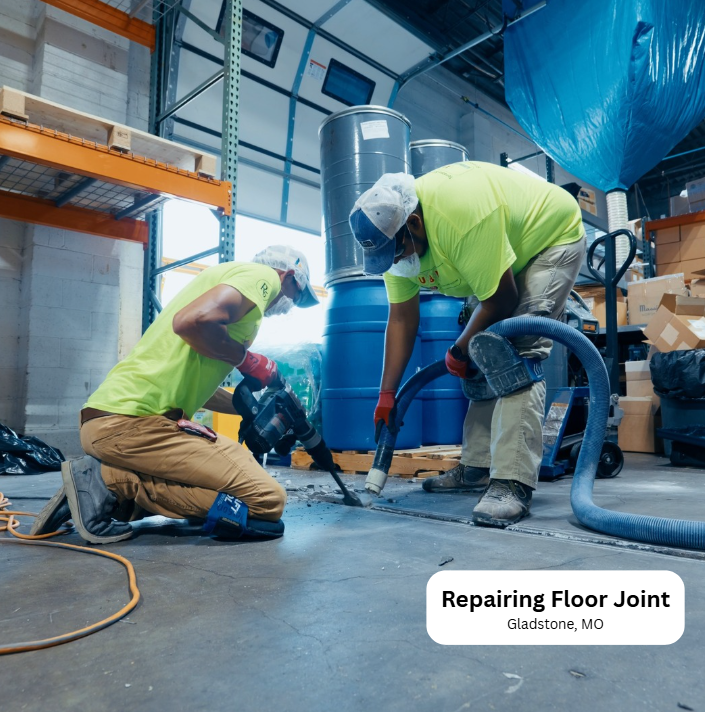
- Remove failed material
-
- Take out loose concrete, failed patching material, and deteriorated joint filler. Prepare sound repair boundaries instead of feathering new material over weak edges.
-
- Clean and prepare the joint
-
- Remove dust and contamination and prepare the concrete according to the selected repair system.
-
- Rebuild damaged joint edges
-
- Restore the joint shoulders with a repair material selected for the repair depth, temperature, traffic, and required return-to-service time.
-
- Install the correct filler or sealant
-
- Use a semi-rigid filler where the joint needs hard-wheel edge support and movement is limited, or a flexible sealant where the joint is designed for greater movement.
-
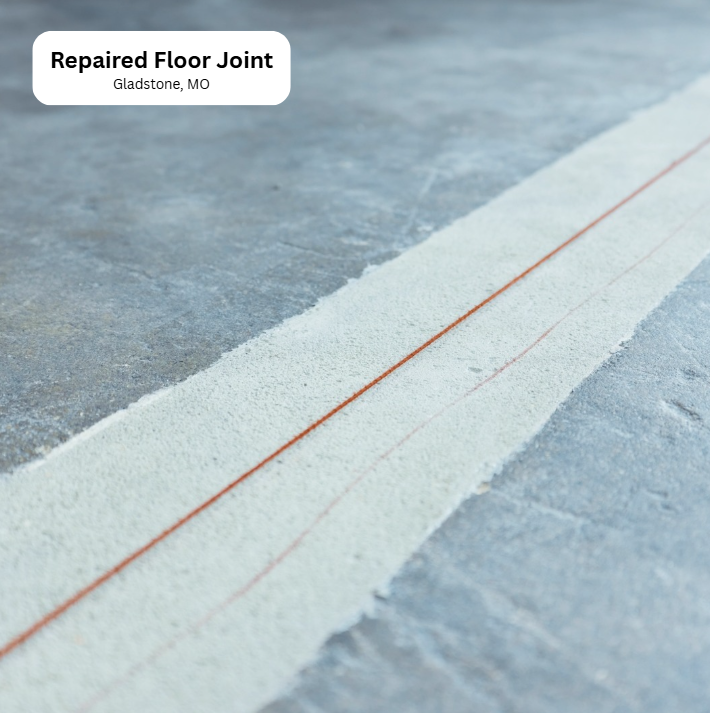
- Finish the transition
-
- Shave, grind, or finish the repair flush where the system allows so forklifts cross the area as smoothly as possible.
-
- Inspect before reopening
-
- Confirm cure requirements, surface profile, bond, cleanup, and traffic release before returning the lane to service.
-
Choosing the correct joint material
Material selection should follow the joint’s function. Semi-rigid polyurea or epoxy joint fillers are often used in interior warehouse control and construction joints because they help support the joint edges under hard-wheel traffic while allowing limited movement. They are not appropriate for every joint.
True expansion and isolation joints generally require a flexible system that can accommodate more movement. A rigid repair material may be appropriate for rebuilding damaged concrete beside a joint, but bridging a moving joint with a hard patch can cause the repair to crack or separate. The contractor should explain why the proposed filler, sealant, or repair mortar fits the specific joint.
8 Important Questions to Ask a Warehouse Joint Repair Contractor:
01. Joint identification
🔍 What type of joint or crack is damaged, and how much movement is present?
02. Cause of failure
⚠️ Why did the edge or previous filler fail, and what part of the repair addresses that cause?
03. Surface preparation
🧹 How will loose concrete, failed filler, dust, oil, and contamination be removed?
04. Edge rebuilding
🛠️ Will the damaged joint shoulders be rebuilt before new filler is installed?
05. Material selection
🧪 Why is the proposed repair material appropriate for the traffic, temperature, joint movement, and floor condition?
06. Return to service
🕒 When can foot traffic, pallet jacks, and loaded forklifts safely cross the repair?
07. Phasing and protection
🛡️ How will the work be scheduled, marked, protected, and cleaned while the warehouse remains active?
08. Written expectations
📋 Does the proposal define repair limits, exclusions, schedule, documentation, and warranty?
Warning signs when comparing contractors
- ⚠️ Quotes the full repair without inspecting the joint or asking about forklift traffic
- ⚠️ Calls every line an expansion joint without checking how the floor was constructed
- ⚠️ Plans to pour filler over loose concrete or failed material
- ⚠️ Cannot explain why the selected material matches the joint movement
- ⚠️ Promises that an actively moving joint will never show damage again
- ⚠️ Provides no clear return-to-service time or traffic-control plan
- ⚠️ Offers only a verbal scope and no written warranty
What affects warehouse joint repair cost
Warehouse concrete joint repair is often measured by linear foot, but length alone does not determine the price. Cost also depends on joint width and depth, the amount of broken concrete beside the joint, removal of old filler, oil or chemical contamination, slab movement, floor temperature, access, traffic control, phasing, and the cure time required by the operation.
A site inspection allows the contractor to separate straightforward filler replacement from repairs that require rebuilding both joint edges. That distinction prevents a low initial price from turning into a short-lived repair.
A warehouse repair should not become your second job
A facility manager should not have to chase the crew, repeatedly explain traffic restrictions, or guess when a repaired lane can reopen. A well-managed project includes one accountable contact, a written scope, a phased schedule, clear barricades, dependable updates, daily cleanup, photo documentation, and a final walkthrough.
Advanced 360 Total Floor Care repairs damaged concrete joints, spalled edges, cracks, and other warehouse floor problems across the Kansas City metro. We inspect the condition, explain the recommended system, coordinate the repair around your operation, document the completed work, and provide a written 12-month workmanship warranty.
Warehouse Concrete Joint Repair in Kansas City
If your forklifts are striking broken joints or previous repairs keep failing, schedule a warehouse joint assessment before the damage spreads farther along the floor. Send the building location, photographs, approximate linear footage, forklift type, operating schedule, and required return-to-service window. We will review the condition and explain the next step in plain language.
➜ Learn how professional Warehouse Joint Filler Installation protects concrete joint edges and reduced repeated forklift impact.
Frequently Asked Questions:
01. Can broken warehouse joints be repaired without replacing the slab?
- Often, yes. Localized joint-edge damage and failed filler can frequently be repaired without replacing an entire slab. Widespread settlement, vertical movement, structural failure, or deep full-slab damage may require a broader evaluation and a different repair approach.
02. How quickly can forklifts return to the repaired area?
- Return-to-service time depends on the repair material, depth, floor temperature, joint condition, and forklift loading. Some fast-curing systems may permit traffic the same day or during the next shift, while other repairs need more time. The contractor should state the release time in writing for the specific system used.
03. Why did our previous joint repair fail?
- Common reasons include weak or contaminated concrete, poor preparation, shallow filler, unsupported broken edges, the wrong material for the joint movement, active slab movement, or traffic returning before the repair cured.
04. Should every warehouse joint be filled with polyurea?
- No. Semi-rigid polyurea can be useful for supporting interior joint edges under hard-wheel traffic, but true expansion or isolation joints may require a more flexible system. Joint function, movement, temperature, and traffic should determine the material.
05. Can repairs be completed while the warehouse remains open?
- Many projects can be completed in phases so selected aisles or work zones remain available. The plan should address forklift routes, barricades, cure times, housekeeping, and communication with warehouse personnel before work starts.
➜ Learn how professional Warehouse Joint Filler Installation protects concrete joint edges and reduced repeated forklift impact.

Dana writes about commercial cleaning, healthcare environmental services, and professional floor care for Kansas City facilities. Through Advanced 360 Total Floor Care and Sani-SAFE Healthcare in Lenexa, Kansas, Dana shares real-world guidance on facility maintenance, infection prevention, floor preservation, inspection readiness, and creating cleaner, safer environments.